Unique traditional stilt house in Nghia Do
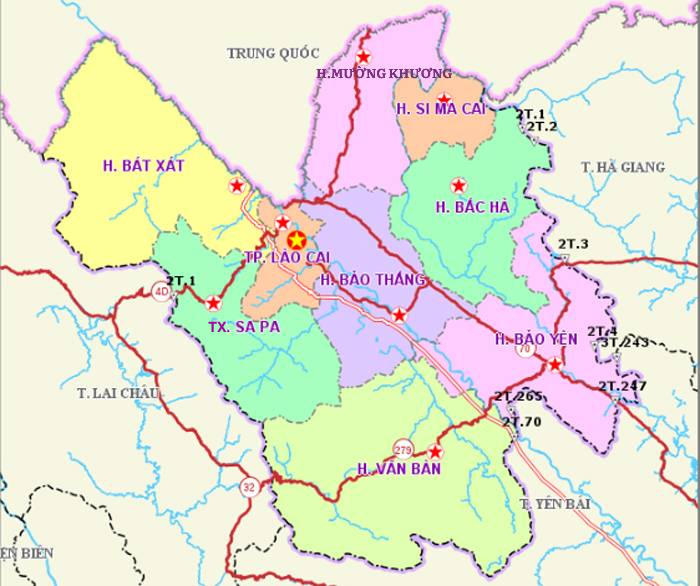
Going to Nghia Do commune (Bao Yen), visitors will see looming under the palm trees are the solid and ancient traditional stilt houses of the Tay people. From long distance, the Tay's stilt house looks like a giant mushroom, making the Tay village exude its very own beauty, in harmony with nature and the surrounding environment. |
| Traditional stilt house. |
Unlike the swidden and nomadic lifestyle of many other ethnic minorities, the Tay people always have the idea of stabilizing their place of residence, from which they think about doing business. From that concept has formed a unique feature in the architecture of the stilt houses. The stilt houses are not only the traditional residence of the Tay family, but also the "cradle" where cultural activities and ancestor worship take place.
According to the concept transferred by their grandfathers, the Tay people appreciate to the place where the house is located, the direction of the house must coincide with the direction of the mountain, be wide and open, and be placed in harmony with nature, especially near the water source. Therefore, the stilt houses of the Tay Nghia Do people are located in a cool, high position, with their backs leaning against the mountains, facing streams or fields. Up to now, the Tay people in Nghia Do have passed 5 "generations" of houses: tents, huts, mandarin houses, private houses, and thong houses with a corridor running along the floor.
According to the old custom of building houses, the Tay people build houses according to odd numbers 3, 5, 7; abstain from using even numbers, especially in a 4-room house because it coincides with the number of deaths (birth, old age, illness, and death). In the house, there are layouts inside, outside, above, below, the most solemn position as a place to worship ancestors. The Tay Nghia Do people put a cooking stove in the middle of the house, this is the main kitchen used to receive guests and a place to keep the fire for other kitchens as well as warm for the whole family; the central kitchen mold is about 1.2 m wide, worshiping the fire god in 4 corners. Many houses also install an auxiliary kitchen mold in the left room of the house, mainly for the elderly to use, and another set up in a separate space to prepare food. The stairs to the house on stilts are made of wood and usually have 9 steps, each step representing th Tay woman's soul. When welcoming guests, the host must go down to the bottom of the stairs to welcome guests to the house.
 |
| The village of the Tay people in Nghia Do |
The house on stilts with utensils for daily living is considered a "cultural heritage" of the Tay people, clearly showing its unique and distinctive solidarity of the whole community. The stilt houses are also a special highlight for tourists when coming to Nghia Do. Currently, Nghia Do has about 84% of the total number of stilt houses in the area. Some houses have been built with cement materials but still carry the traditional stilt house architecture of the Tay people. This is also considered an ideal chek-in place for tourists in the journey to discover the peaceful land of Nghia Do...