The distinctive "Echoes of the Mountains and Forests" dance of the Dao community around Thac Ba Lake
Once performed only at traditional festivals of the White-Trousered Dao, the "Echoes of the Mountains and Forests" dance is becoming a distinctive cultural product that helps promote Thac Ba Lake and develop community-based tourism.
More than a sequence of visually striking stage movements, "Echoes of the Mountains and Forests", performed by the White-Trousered Dao in Thac Ba Commune, Lao Cai, is taking on a larger mission: telling the story of cultural identity, the vitality of lakeside communities and the aspiration to turn heritage into a driver of sustainable tourism.
Local residents took pride in the dance being selected to represent Lao Cai Province at the 2026 Red Flamboyant Festival in Hai Phong and at a cultural exchange programme in Ninh Binh. Its selection also demonstrates the vitality of a folk art form being preserved, renewed and shared by the community itself.
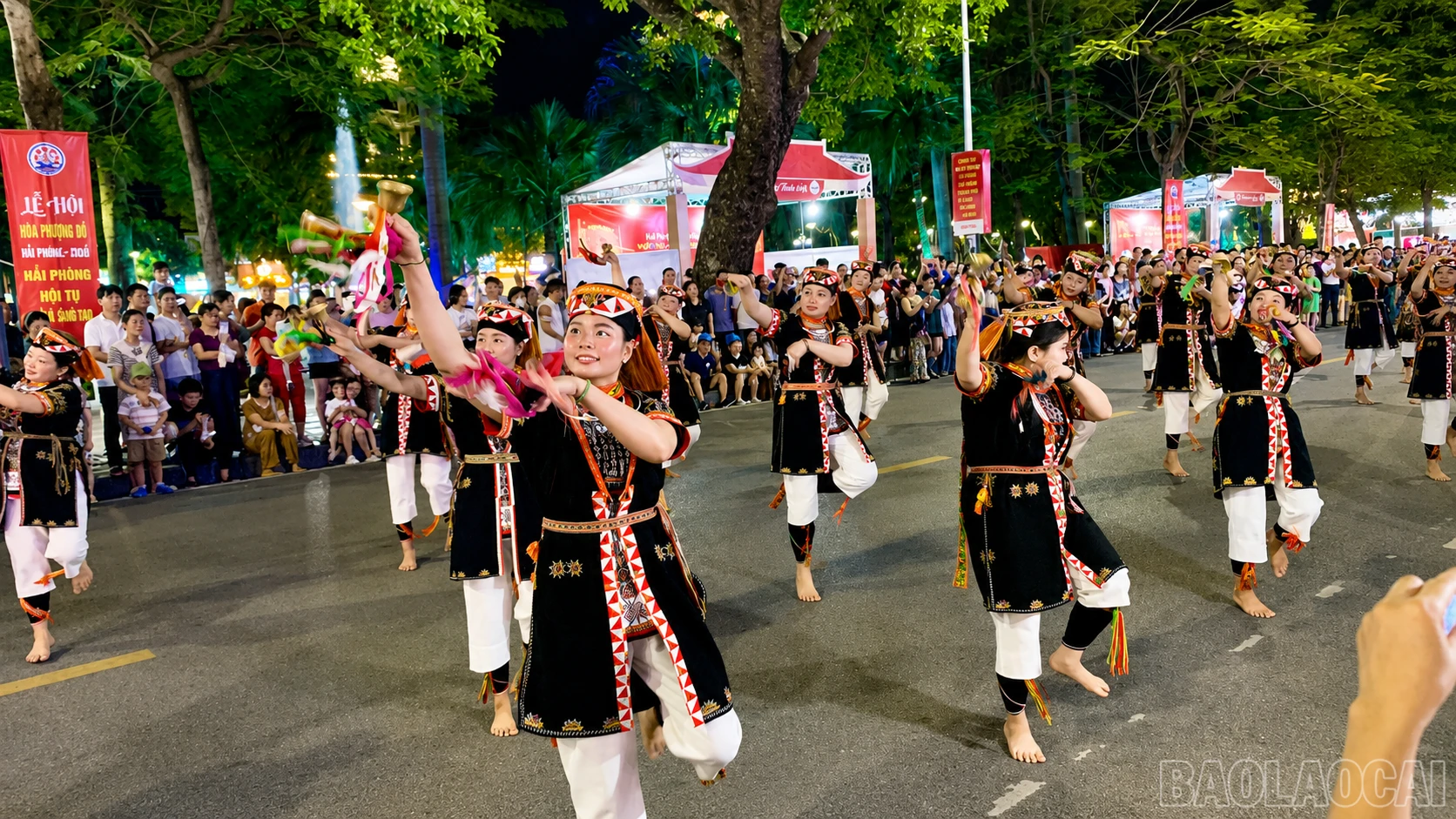 The White-Trousered Dao of Thac Ba Commune performed "Echoes of the Mountains and Forests" at the 2026 Red Flamboyant Festival in Hai Phong.
Behind the vigorous steps and lively sounds of bells, drums and gongs lies the long-standing culture of the White-Trousered Dao around Thac Ba Lake. "Echoes of the Mountains and Forests" draws on elements of the cap sac initiation ceremony and the crop-praying festival, two important rituals expressing aspirations for maturity, prosperity and peace.
The dance stylizes traditional values through movement, combining distinctive sounds with gestures that imitate everyday work such as clearing fields, sowing seeds and harvesting rice, vividly recreating the Dao people's life and close connection with the mountains, forests and Thac Ba Lake.
Dang Thi Ba of the Ngoi Tu Village arts team in Thac Ba Commune said: "More than simply a performance, 'Echoes of the Mountains and Forests' has become a story told through art about the origins, labour, beliefs and aspiration for progress of our Dao people."
With participation spanning generations, from veteran artisans to young performers, "Echoes of the Mountains and Forests" has moved beyond community festivals to major stages while retaining its traditional cultural values.
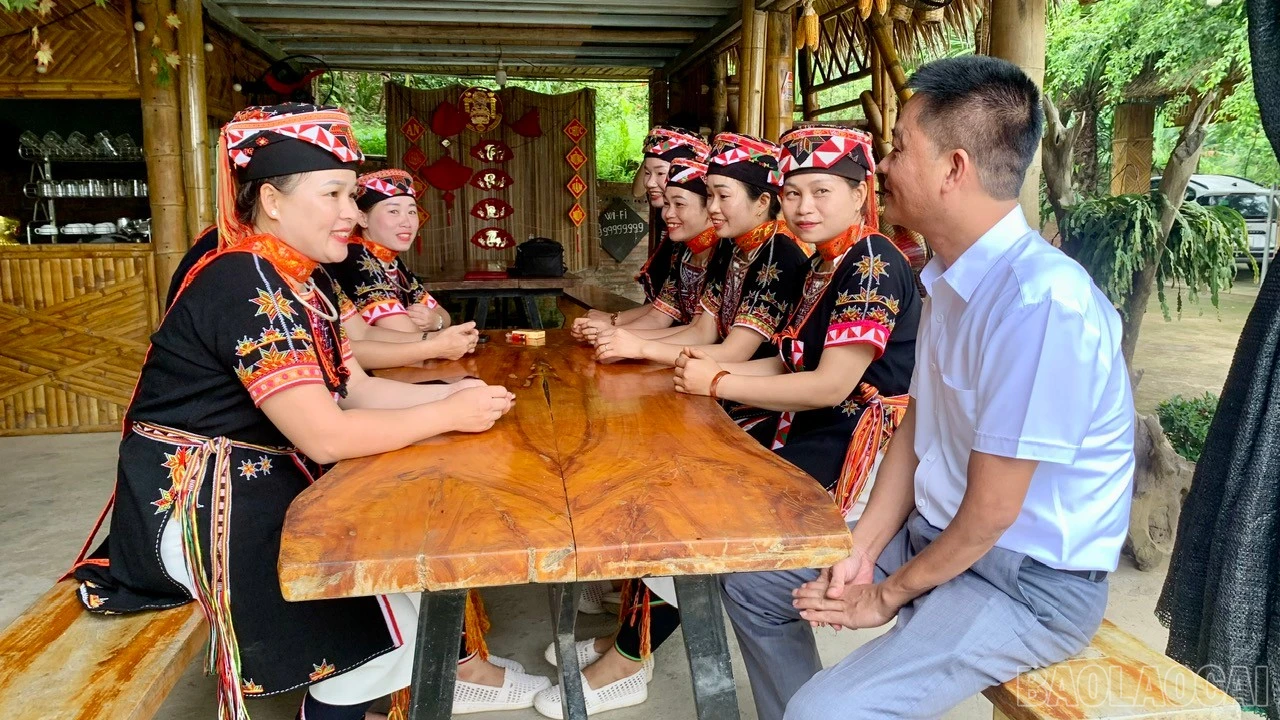 Leaders of the Thac Ba Commune Culture and Social Affairs Division join a gathering of the Ngoi Tu Village arts team.
The dance's appeal also lies in its balance of tradition and modernity. While its core retains the rustic and sacred character of traditional culture, its staging, rhythm and composition are modern enough to fit the energetic atmosphere of major festivals.
Ban Thi Ke of the Ngoi Tu Village arts team said "Echoes of the Mountains and Forests" was expected to become a "cultural ambassador", introducing the landscapes and people of Thac Ba to domestic and international visitors. "Taking the dance to cultural exchange programmes demonstrates the locality's determination to preserve and promote cultural values in tandem with tourism development - an approach increasingly chosen by localities seeking both to safeguard heritage and create livelihoods for residents," she said.
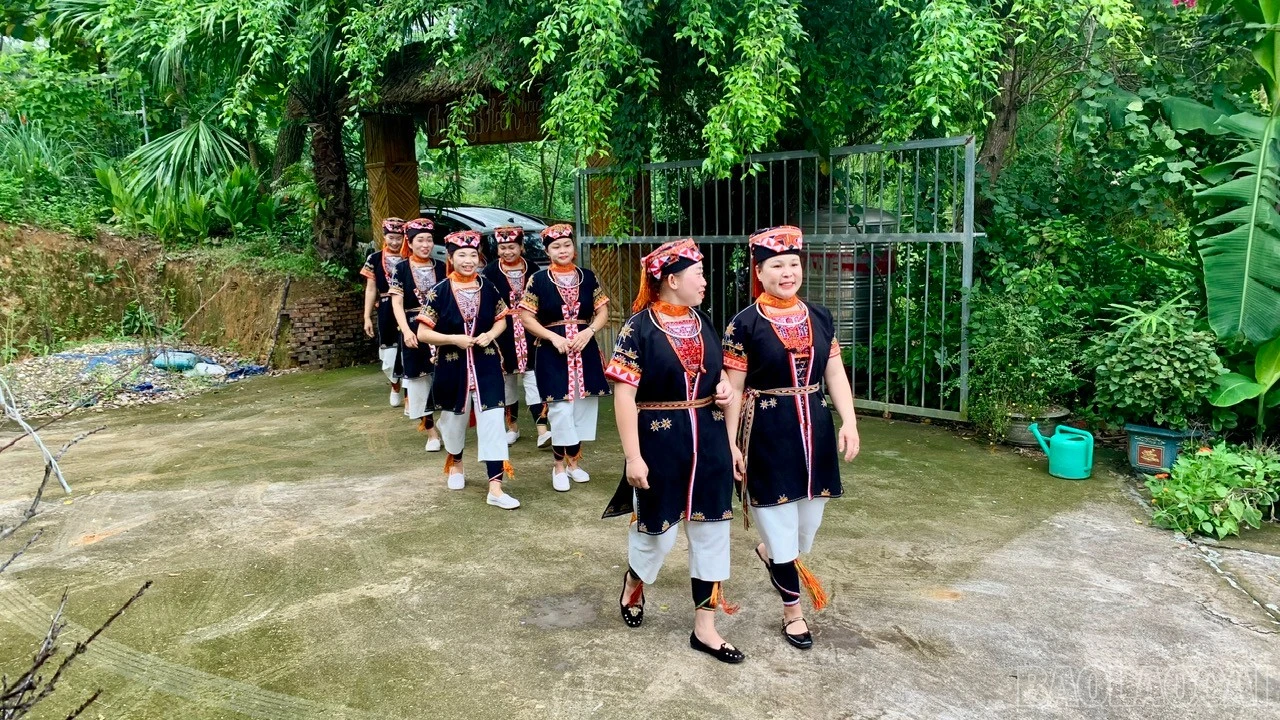
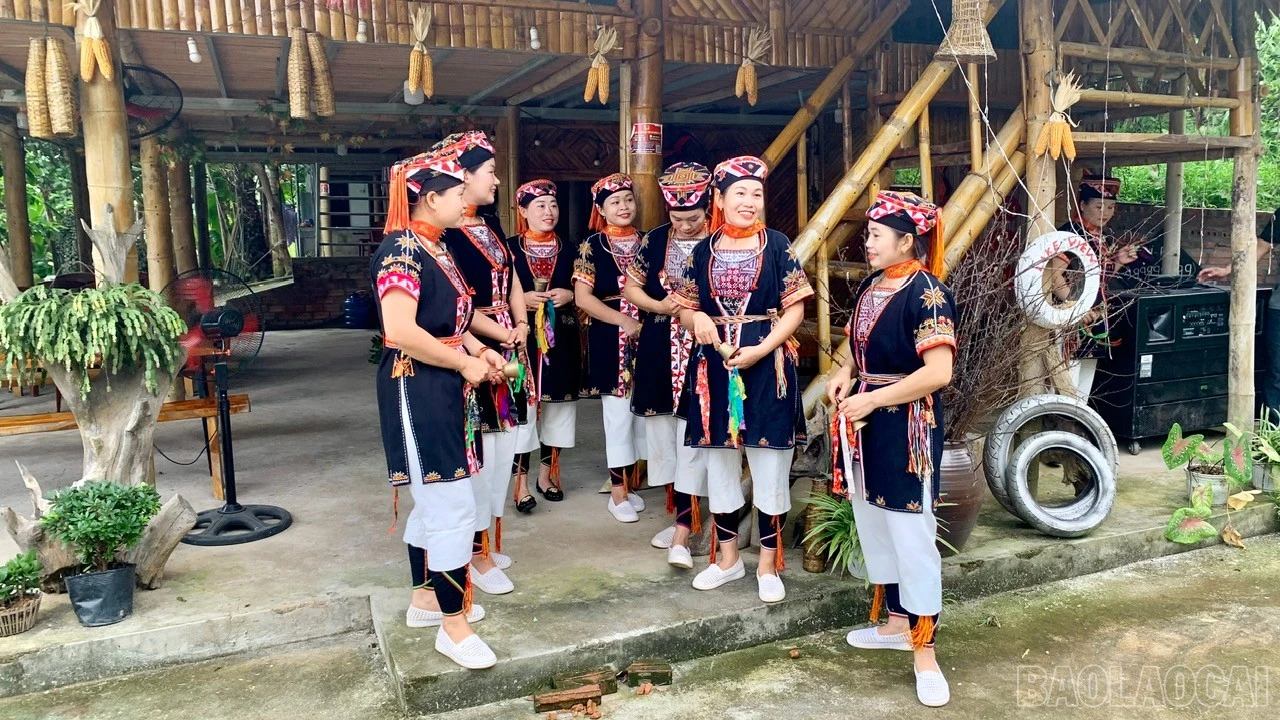
Performing "Echoes of the Mountains and Forests" is an honour and a source of pride for Dao women.
Notably, efforts to preserve traditional Dao dances in Thac Ba go beyond staged performances and festival programmes. They are maintained and passed on in community life through village gatherings and traditional festivals. The commune supports folk culture and arts clubs in many villages, giving residents regular opportunities to practise and perform.
In 2025 and 2026, the locality organized two classes to transmit intangible cultural heritage, one for adults and another for school-age children. The approach helps younger generations engage with their ethnic heritage from an early age and develop a sense of responsibility for preserving and promoting traditional values.
Folk dances have also been incorporated into regular activities at homestays and community tourism sites. This both generates additional income for residents and turns heritage into an attractive tourism product.
As part of the locality's tourism-development strategy, bringing the dance to festivals in Hai Phong and Ninh Binh is a step towards comprehensive promotion of Thac Ba Lake. Through Dao women in traditional dress, the locality hopes to bring the beauty of Thac Ba Lake, the distinctive culture of the Dao people, and the appeal of ecotourism and cultural tourism products closer to visitors at home and abroad.
The broader goal is to attract more visitors, stimulate service-sector growth and raise local incomes, while encouraging younger generations to continue preserving dances, folk songs and traditional customs.
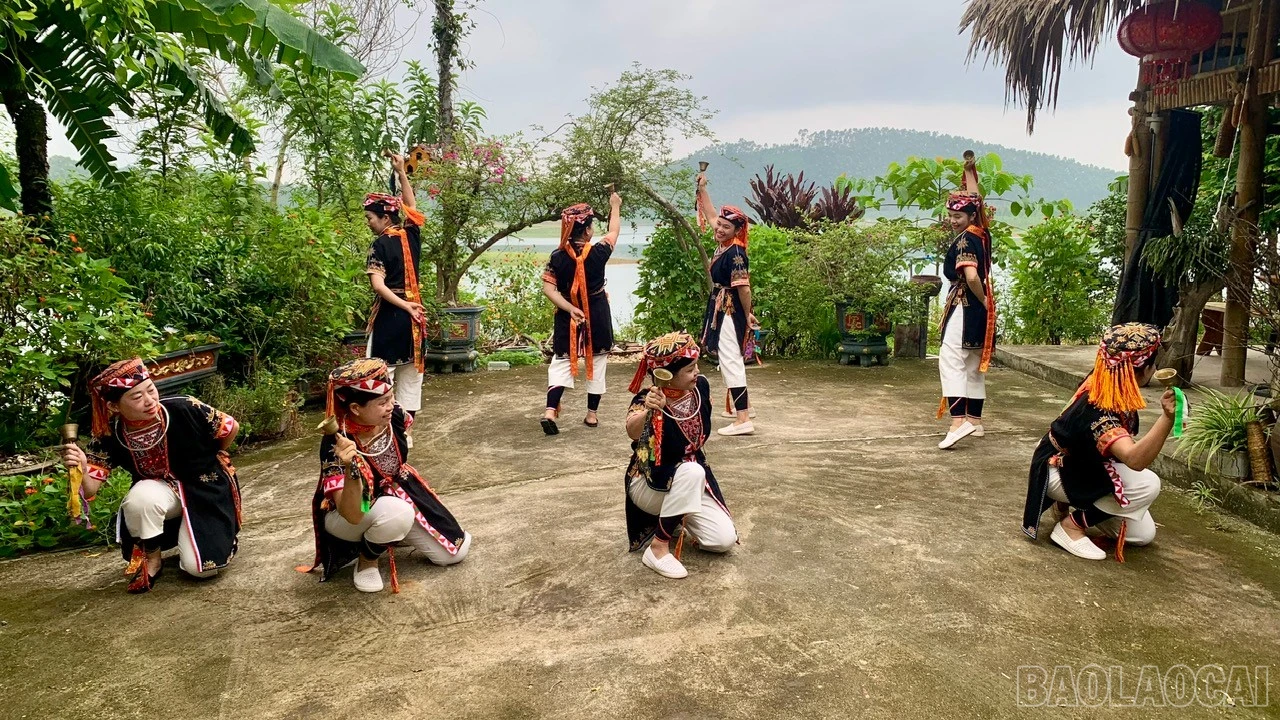
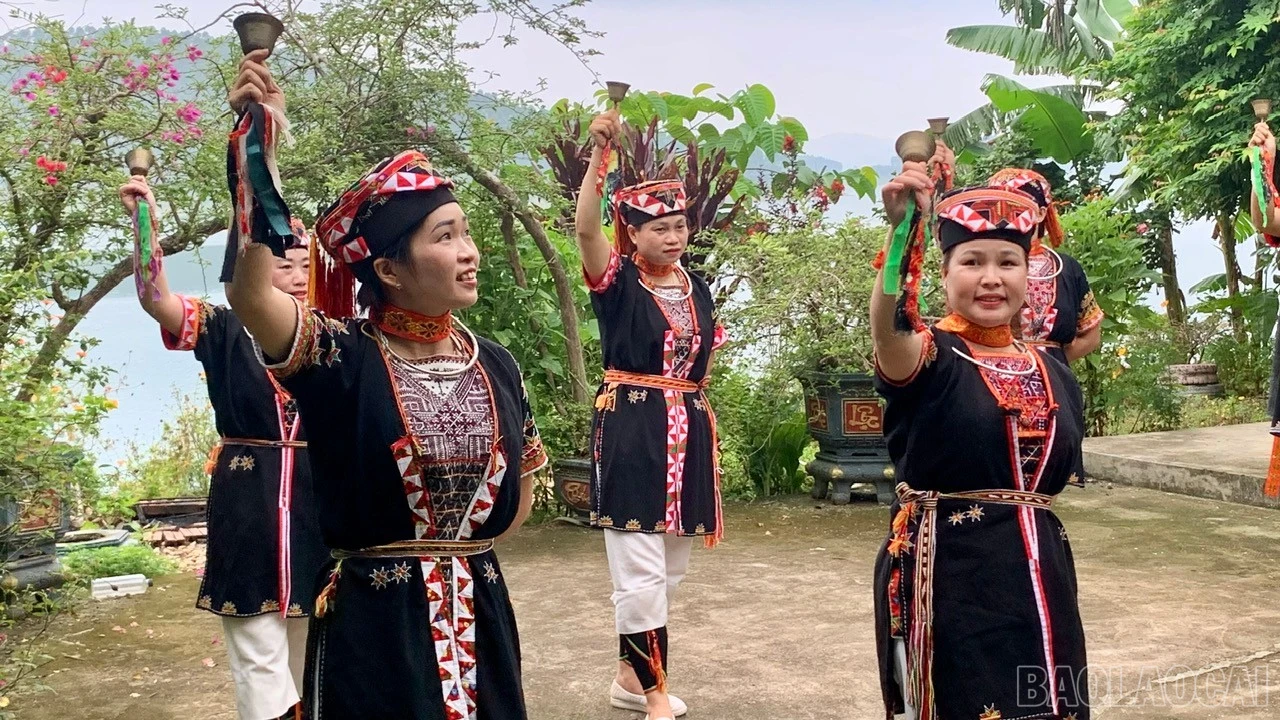
"Echoes of the Mountains and Forests" has become an indispensable cultural experience for visitors to the locality.
Under its long-term strategy, Thac Ba Commune will continue investing in the Ngoi Tu Village community cultural tourism village. Visitors will be able to enjoy Dao dances and traditional cuisine, learn about herbal-medicine making and medicinal-leaf bathing, and explore local cultural life. In parallel, the locality plans to develop a Cao Lan community-based tourism model in Da Trang Village, creating a more diverse range of tourism products.
Dinh Van Toan, Head of the Thac Ba Commune Culture and Social Affairs Division, said: "To meet development needs, the commune will continue organizing training courses for residents in tourism skills, communication and foreign languages; and work with travel companies to build closed-loop tours connecting Thac Ba Lake sightseeing, Dao-Cao Lan cultural experiences, historical sites and the Dai Minh pomelo-growing area. Our goal is for tourism to become an important local economic sector by 2030."
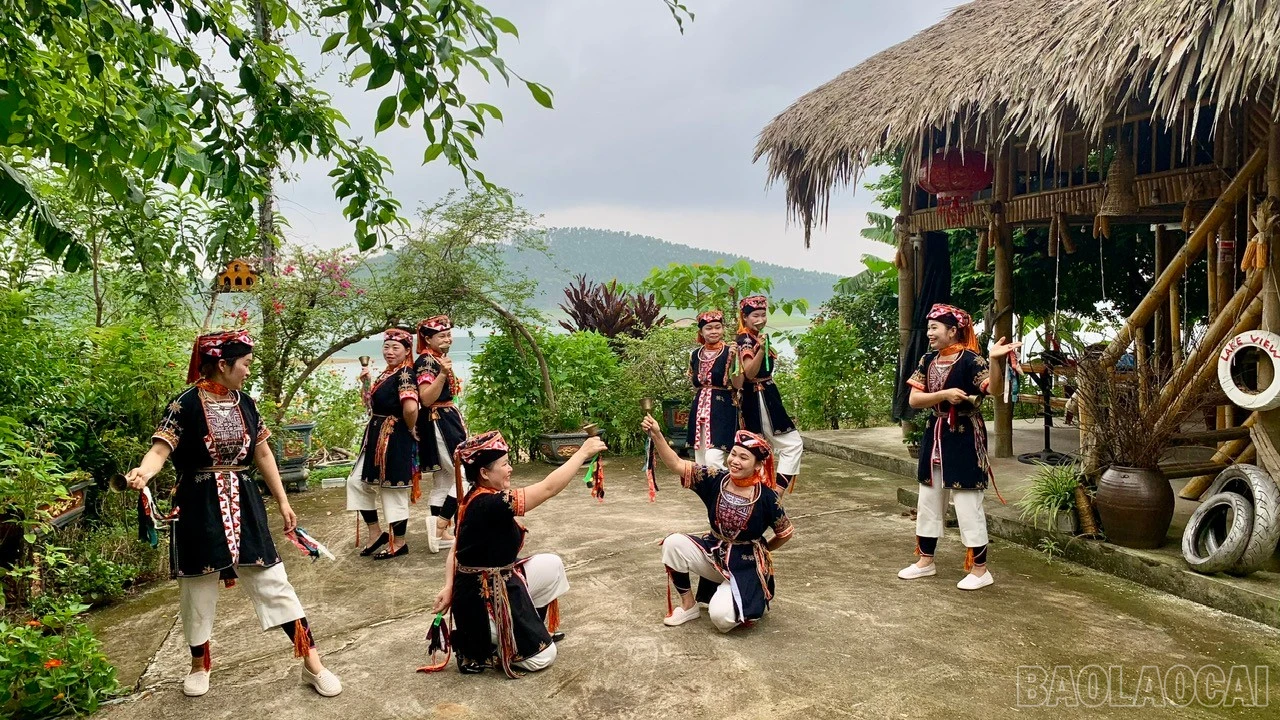
"Echoes of the Mountains and Forests" was opening a new journey - one in which heritage becomes an asset.
Once heard only in village festival spaces, "Echoes of the Mountains and Forests" is gradually moving onto larger stages. Every drumbeat, bell and step of White-Trousered Dao artisans and performers promises a new journey in which heritage becomes a development resource, culture becomes an asset and identity becomes a source of strength for building sustainable tourism around Thac Ba Lake.
https://baolaocai.vn/doc-dao-dieu-mua-am-vang-nui-rung-cua-nguoi-dao-vung-ho-thac-ba-post904382.html