Bao Ha aims towards a modern spiritual tourism city
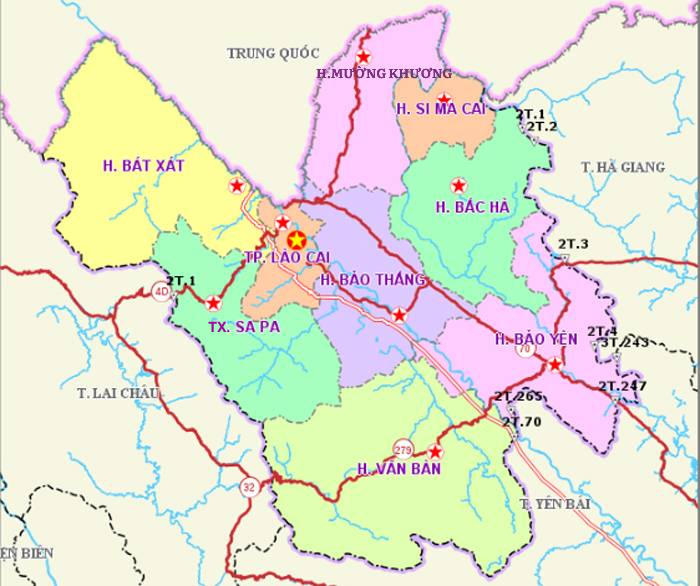
Lao Cai Province has been focusing on developing the town of Bao Ha (in Bao Yen District), with upgraded infrastructure to support tourism growth. Recently, the province adjusted its urban development plan for Bao Ha through 2030, aiming to expand and enhance regional connections for spiritual tourism.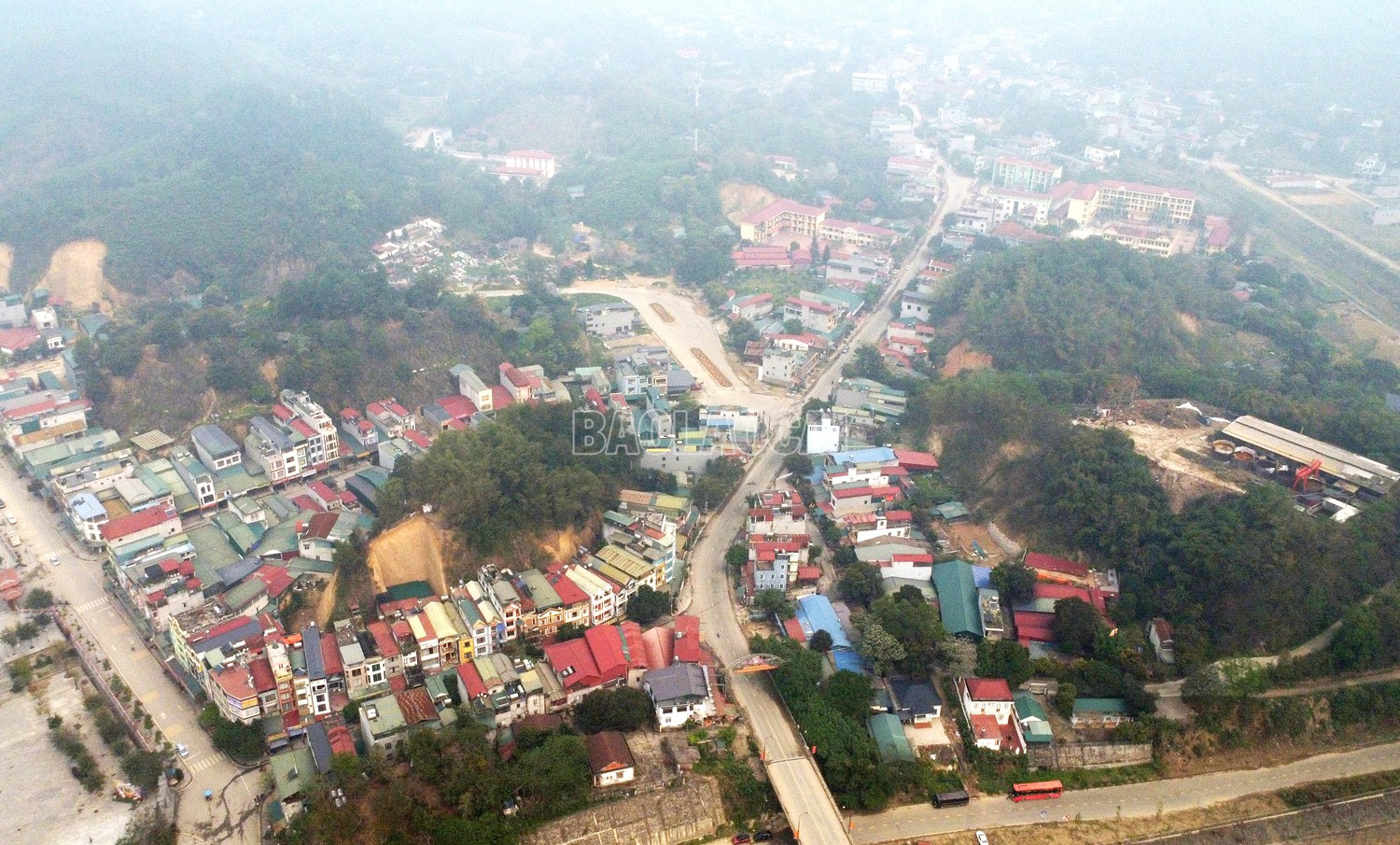
The space of Bao Ha central urban area.
The people’s Committee eagerly shared stories of the area’s transformation. Once a small commune-level township, Bao Ha has been receiving significant investment to become a more expansive, modern, and sustainable urban area - one that preserves the cultural identity of local ethnic groups and honors its historical values, all while supporting the growth of spiritual tourism. The sacred Bao Ha Temple, nestled by the banks of the Red River, is a source of deep local pride - both as a revered heritage site and as a key driver of cultural and economic development. In recent years, the temple complex has undergone thoughtful expansion and beautification, creating a clean, scenic space that welcomes growing numbers of visitors and pilgrims.
The province aims to transform Bao Ha into a leading spiritual tourism hub on both regional and national scales. Centered around the Bao Ha Temple - a national historical and cultural relic - the plan envisions a 2,500-hectare area hosting service facilities, urban zones, cultural and spiritual recreation complexes, and tourism infrastructure. This future urban center is designed to connect Lao Cai with neighboring provinces such as Lai Chau, Tuyen Quang, and Ha Giang. The development strategy also ensures a balance between economic, cultural, social, and national security goals. A new urban area is gradually taking shape, featuring functional zones for administration, cultural and spiritual activities, eco-resorts, public services, and sports parks - all showcasing the unique characteristics of the Northwest highlands. This will become a cultural and sports tourism town with a distinctly local identity.
Currently, Bao Ha is being developed across five major zones. The core administrative, residential, and sports center covers 375.31 hectares, serving as the gateway to the Noi Bai - Lao Cai Expressway via National Highway 279. The existing central area is being upgraded with improved infrastructure and appropriate residential density. Meanwhile, the spiritual tourism zone spans over 2,148 hectares, now undergoing synchronized development to integrate natural landscapes with agriculture and forestry. This area is also being shaped to connect the spiritual zone with recreational and sports parks and the Bao Ha Temple, creating a dynamic axis for spiritual tourism and public leisure.
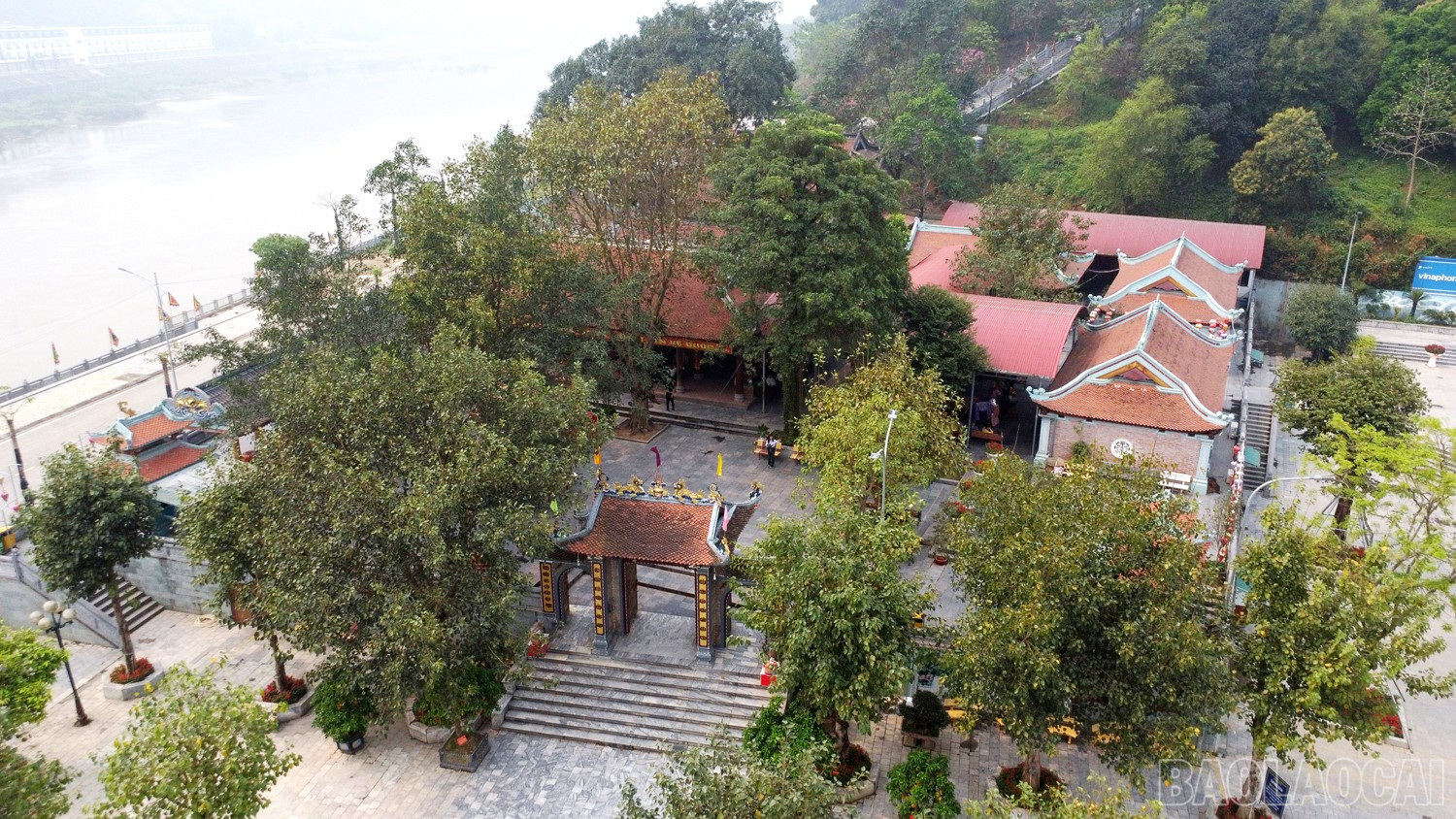
Bao Ha Temple - spiritual tourist area.
According to Mr. Tran Duc Tinh, Deputy Director of the Department of Construction, the initial phase of investment will prioritize the development of education, healthcare, and public health facilities in line with the pace of urban expansion. Gradually, the province aims to develop a spiritual park complex harmoniously integrated with the surrounding ecological landscape and local agricultural and forestry production. Several projects in the area already have approved detailed construction plans, and essential infrastructure is being put in place to timely support local socioeconomic growth.
Lao Cai Province’s urban development goals align with the National Master Plan for Urban and Rural Systems, as well as the province’s broader socioeconomic development strategy. The vision is to create modern urban areas with comprehensive technical and social infrastructure, following principles of green growth, smart and sustainable development. This includes maximizing regional advantages, efficiently using available resources, and preserving cultural identity and natural assets. Urbanization is to be focused and strategic, closely linked with new rural development, moving toward more civilized cities that improve quality of life, ensure security and public order, and protect the environment. In this broader context, Bao Ha is emerging as a promising future regional connector, meeting key urban development criteria and showing strong potential to become an integrated center in the near future.
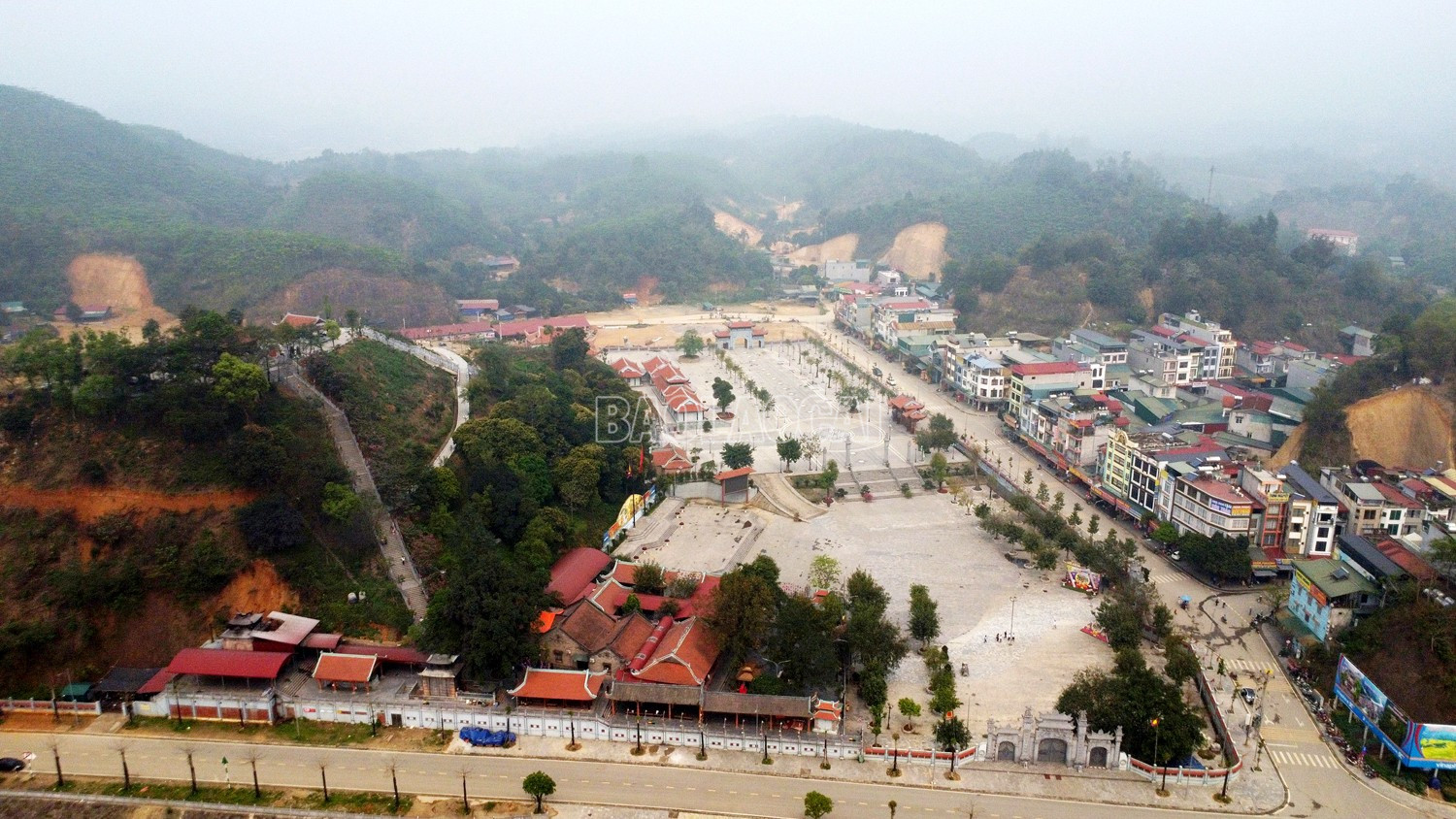
Bao Ha Temple is being planned to be rebuilt larger, cleaner and more beautiful.
Mr. Tran Duc Tinh further shared: "With its central location where the new Lao Cai - Hanoi - Hai Phong railway line will pass through, and the Noi Bai - Lao Cai Expressway set to be expanded, Bao Ha is ideally positioned to connect with key tourism hubs in the Northwest region in stages until 2030, with a vision to 2050. This is also one of the pivotal urban areas to concretize the socio-economic development strategy, gradually increasing the province's urbanization rate, contributing to the formation of a sustainable development space that harmonizes economic growth with the preservation of historical and cultural relics, environmental protection, and ensuring national defense and security, etc.
https://baolaocai.vn/bao-ha-huong-toi-do-thi-du-lich-tam-linh-hien-dai-post401358.html